

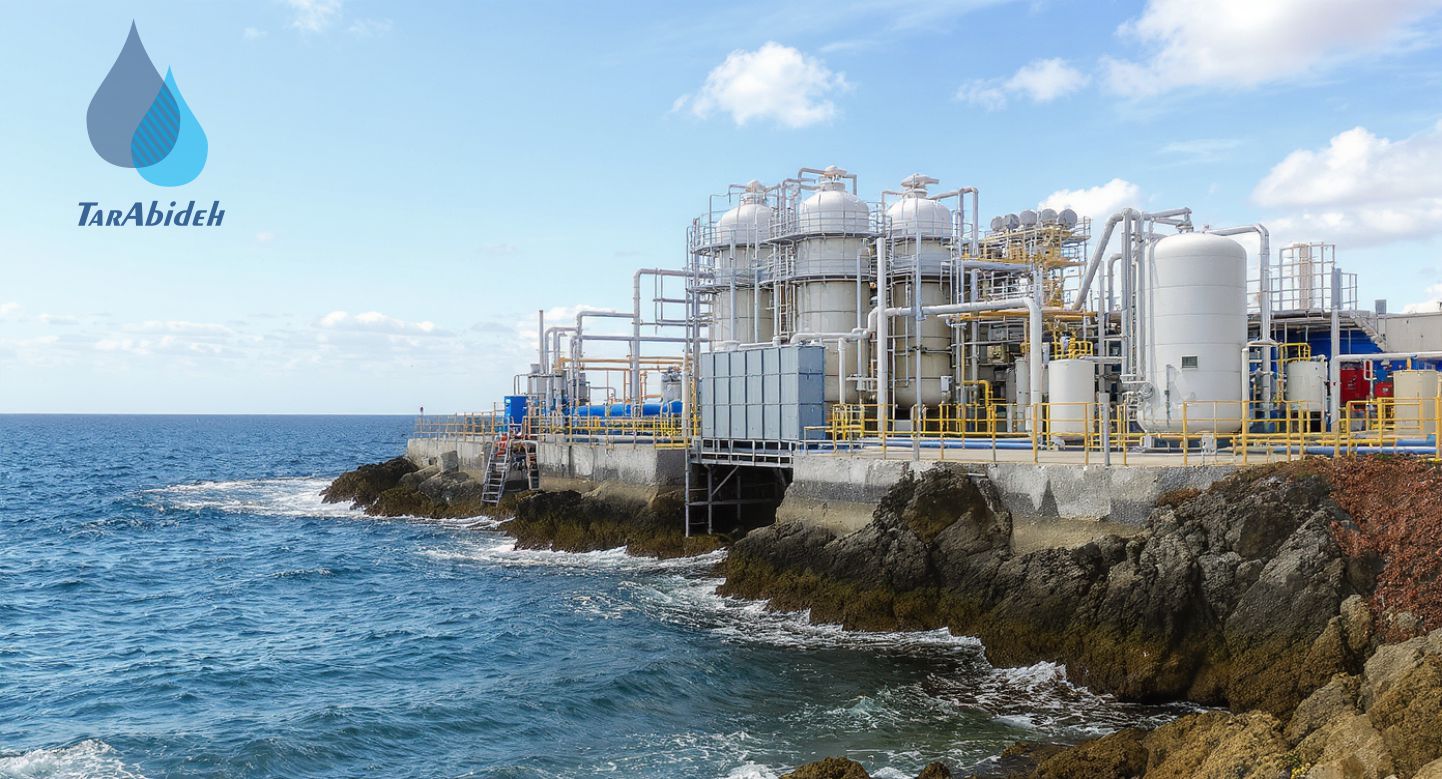
Seawater Desalination: A Sustainable Solution to the Water Crisis
Introduction
With global population growth, industrial expansion, and climate change, freshwater resources are facing serious depletion in many parts of the world. In this context, seawater desalination has emerged as an innovative and sustainable solution to provide potable and industrial water. This process removes salt and other minerals from seawater, turning it into a usable resource for human consumption.
Importance of Seawater Desalination
Although over 70% of the Earth’s surface is covered with water, only 2.5% is freshwater. Of that, less than 1% is directly accessible for human use. Arid and semi-arid regions—particularly in the Middle East, North Africa, and parts of Asia—are facing severe water shortages. Seawater desalination can reduce dependence on groundwater and rivers while ensuring water security.
Methods of Seawater Desalination
1. Reverse Osmosis (RO)
The most widely used technology worldwide, RO forces seawater through semi-permeable membranes under high pressure, separating salts and impurities.
Advantages:
- Lower energy consumption compared to other methods
- High-quality water output
- Suitable for both small- and large-scale plants
2. Thermal Distillation
In this method, seawater is evaporated and the resulting vapor condensed into freshwater. Common types include MED (Multi-Effect Distillation), MSF (Multi-Stage Flash), and VC (Vapor Compression).
Advantages:
- Suitable for regions with access to low-cost energy
- Resistant to biological and chemical contaminants
3. Electrodialysis (ED)
This technology uses electric current to separate salt ions from water, making it more suitable for brackish water desalination.
Advantages and Challenges of Seawater Desalination
Advantages:
- Reliable supply of drinking water
- Reduced dependence on surface and groundwater resources
- Enhanced food security and agricultural development in arid regions
Challenges:
- High energy consumption: desalination is energy-intensive, increasing operational costs in some countries.
- Environmental impact: disposal of concentrated brine into the sea can damage marine ecosystems.
- High capital costs: building and maintaining desalination plants require significant investment.
Global Status of Seawater Desalination
According to international statistics, more than 180 countries use desalination technologies. Gulf states such as Saudi Arabia, the UAE, and Kuwait are global leaders, while countries like Spain, Israel, Australia, and the United States have also made major investments in this sector.
Seawater Desalination in Iran
Despite having access to vast marine resources in both the north and south, Iran is still in the early stages of developing its desalination industry. Ongoing projects in southern provinces such as Hormozgan, Bushehr, and Sistan & Baluchestan aim to address this issue. Given the severe water crisis in central Iran, desalination and water transfer from coastal areas could play a critical role in the country’s future water security.
Emerging Technologies in Desalination
- Nanotechnology: nanostructured membranes improve energy efficiency and system performance.
- Solar desalination: using solar energy for evaporation offers an eco-friendly alternative.
- Smart pretreatment: automated systems for particle removal enhance membrane lifespan and reduce operating costs.
Conclusion
Seawater desalination is a strategic and sustainable solution to the global water crisis. With technological advancements and cost reductions, this industry is expected to play an even more vital role in future water supply. Investment in infrastructure, renewable energy integration, and responsible brine management can ensure a brighter future for drought-affected regions.
Frequently Asked Questions
- Is desalinated water comparable in quality to well water?
Yes. Water produced through RO systems is often purer than many groundwater sources. - Is seawater desalination cost-effective?
It used to be costly, but modern technologies have significantly improved efficiency and reduced costs. - How can the environmental impact of brine disposal be minimized?
By applying proper brine management and advanced recovery technologies, negative effects on marine ecosystems can be mitigated.