

Faced with increasing pressure on global water resources and the growing demand for sustainable water quality, advanced water treatment technologies like Ultrafiltration (UF) have become a cornerstone in this field.
What is Ultrafiltration (UF)?
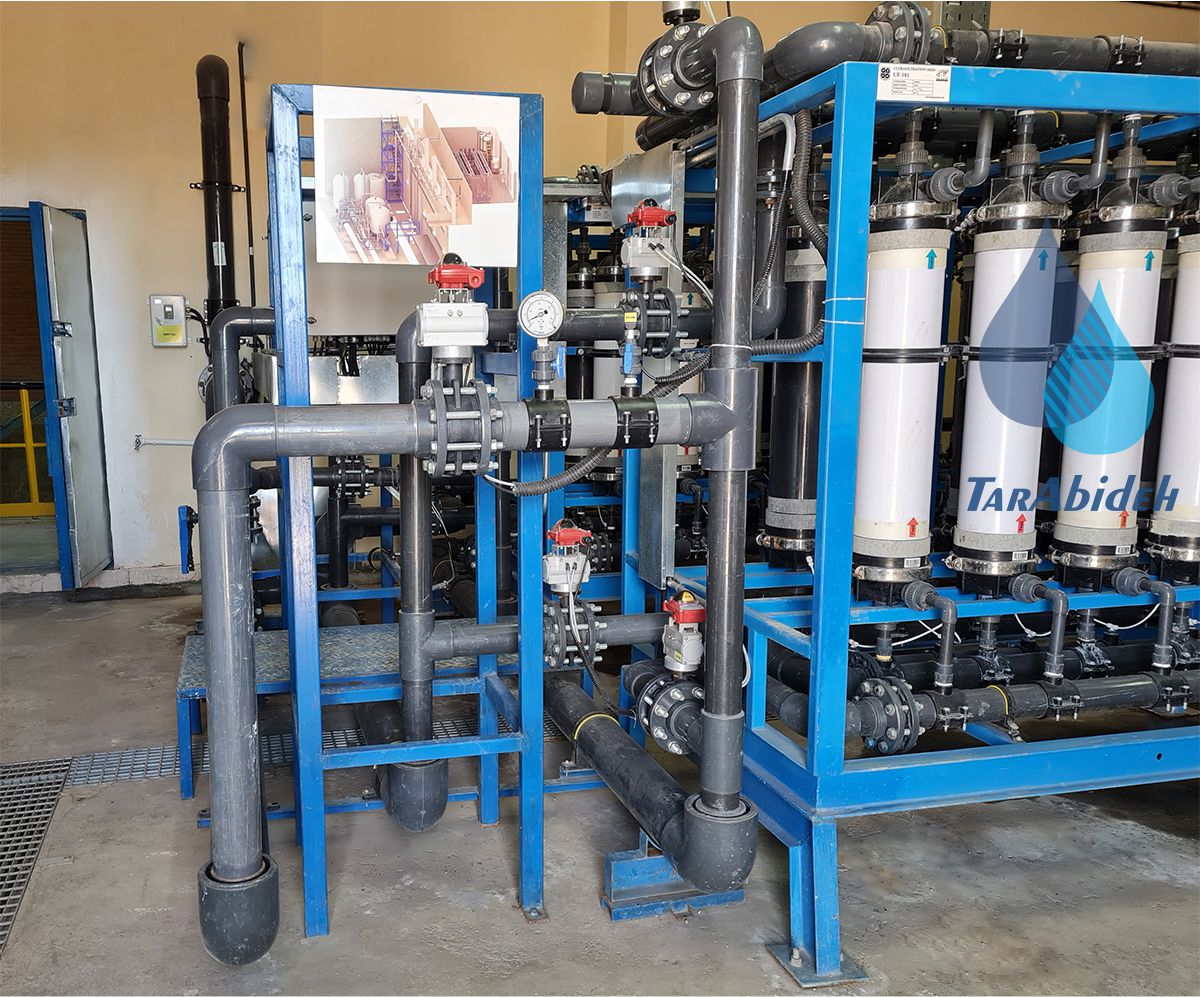
Ultrafiltration is a membrane-based water treatment process used to remove suspended solids, colloids, bacteria, viruses, and high-molecular-weight molecules from water. UF membranes have extremely fine pores, typically ranging from 0.01 to 0.1 microns. Unlike Reverse Osmosis (RO), which can also remove dissolved salts and ions, UF focuses on separating larger particles without affecting dissolved salts. Its popularity stems from high efficiency, lower energy consumption, operational stability, and limited chemical requirements.
How Ultrafiltration Works
UF is a pressure-driven membrane filtration process that effectively removes contaminants from water. The core of the system is the industrial semi-permeable membrane, through which pressurized water passes. Particles larger than the pore size are trapped on the surface or within the membrane structure, while water molecules and smaller solutes pass through.
Main steps in UF process:
-
Pre-filtration: A pre-filter removes large particles that could damage the membrane.
-
Pressure application: Water is either pressurized or drawn through hollow fibers by vacuum to pass through the membrane.
-
Membrane separation: Contaminants larger than the membrane pores are retained.
-
Permeate collection: Treated water (permeate) passes through the membrane for use or further treatment.
-
Concentrate removal: Larger contaminants accumulate on the feed side as concentrate, which is periodically discharged.
-
Backwashing: Periodic reverse flow cleans the membrane surface to maintain performance.
UF Membranes: Components and Types
UF membranes come in various configurations for specific applications. Common materials include Polysulfone (PSF), Polyacrylonitrile (PAN), Polyvinylidene Fluoride (PVDF), and Polyethersulfone (PES). Multibore™ membranes by DuPont use multiple capillaries in a single fiber, providing high mechanical stability.
Main types of UF membranes:
-
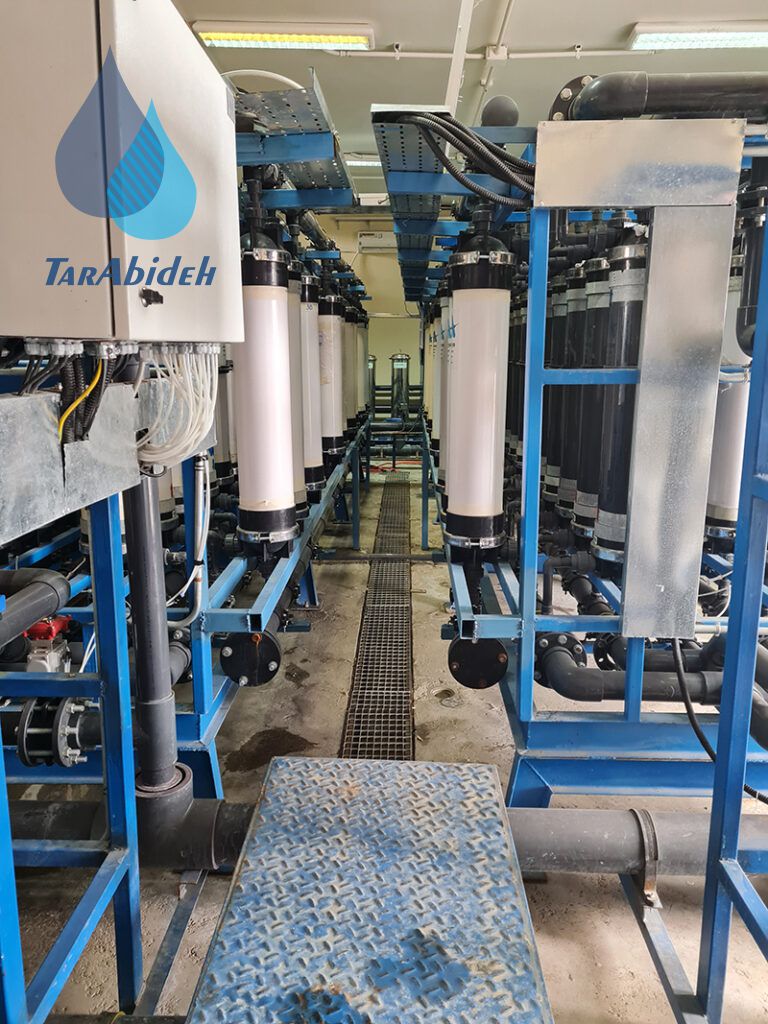
Immersed Hollow Fiber: Bundles of hollow fibers with microscopic pores; water flows inside-out or outside-in. Ideal for high solids content, commonly used in municipal water and wastewater treatment.
-
Pressurized Hollow Fiber: Water is pressurized into the module and fibers; suitable for fluctuating feedwater quality without affecting output. Used in drinking water and industrial water treatment.
-
Spiral Wound: Flat membrane sheets wrapped around a central permeate tube; compact and produces higher-quality water. Widely used in food and beverage industries.
-
Tubular Membranes: Porous-walled tubes; excellent for high solids content, easy to clean, ideal for industrial wastewater with challenging feed streams.
-
Plate and Frame Membranes: Flat sheets sandwiched between support plates; known for durability and high-pressure tolerance, suitable for specialized industrial applications.
Contaminants Removed by UF
UF effectively removes:
-
Suspended solids: Colloids and turbidity (feed water turbidity should be <5 NTU).
-
Microorganisms: Bacteria (99.99% removal), protozoa (e.g., Giardia and Cryptosporidium), and some viruses.
-
Organic compounds: High-molecular-weight organics, some humic substances.
-
Inorganic compounds: Certain heavy metals if attached to organics or particles.
-
Other contaminants: Algae and some parasites.
Limitations: UF cannot remove dissolved salts, small organic molecules, or ions smaller than the membrane pores. RO or ion exchange (IX) is required for these.
Advantages of Ultrafiltration
-
Consistent water quality: Produces high-quality water with low turbidity (up to 0.1 NTU) regardless of feedwater fluctuations.
-
Low energy consumption: Operates under low pressure.
-
Reduced chemical usage: Minimal chemical requirements.
-
Compact footprint, high capacity: Small size with high recovery rates.
-
High resistance: Membranes withstand oxidation, heat, and chemicals.
-
Ease of maintenance and installation: Simplified operation and lower maintenance needs.
Industrial Applications of UF
UF is widely applied in industrial, municipal, residential, and agricultural sectors. It often serves as a pretreatment step or final polishing:
-
Power plants: Pretreatment for boilers and cooling systems, removes suspended solids to protect RO membranes.
-
Refineries, petrochemical, and chemical industries: Removes solids, oils, turbidity, and color; used as RO/IX pretreatment, acid/base recovery, and metal concentration.
-
Oil & gas: Drinking water on offshore platforms, produced water treatment, and wastewater recycling.
-
Mining & metals: Wastewater reuse, metal recovery, and seawater pretreatment before RO.
-
Food & beverage: Clarification and concentration of juices, beer, wine, coffee, tea; microbial and protein removal; whey and casein concentration in dairy.
-
Pharmaceuticals & healthcare: High-quality purified water, process stream separation, and wastewater treatment.
-
Municipal water treatment: Removes bacteria and viruses; RO pretreatment.
-
Pulp & paper: RO/IX pretreatment, wastewater recycling, process water reuse.
UF as Pretreatment for RO Systems
Using UF as a pretreatment step for RO systems is common and critical:
-
Extends RO membrane life: Removes large particles and bacteria, reducing fouling and damage.
-
Reduces scaling: Removes suspended solids and colloids, minimizing antiscalant requirements.
-
Reduces chemical consumption: Less chlorine or ozone required, preventing RO membrane damage.
-
Enhances overall system efficiency: Higher feedwater quality improves RO performance and stability.
This combination makes industrial RO systems more efficient and cost-effective, particularly for brackish and wastewater treatment.
Maintenance and Cleaning of UF Membranes
Proper maintenance ensures membrane longevity and system performance:
-
Regular backwashing: Removes accumulated particles; flow is reversed from permeate to feed side.
-
Chemically Enhanced Backwash (CEB): Periodic addition of chemicals (acids, bases, oxidants) to improve cleaning and remove stubborn deposits.
-
Clean-In-Place (CIP): Comprehensive chemical cleaning when permeability drops significantly; circulation of chemicals for up to 12 hours.
-
Chemicals used: HCl or H₂SO₄ for inorganic deposits, NaOH for organics, NaOCl as oxidant/disinfectant.
-
Integrity testing: Regular tests (pressure drop, bubble tests) to check membrane health.
-
Feedwater pretreatment: Control feedwater quality, use microflocculation (FeCl₃ or PACI) for DOC removal, and pre-filters for large particles. Continuous chlorination is discouraged.
-
Membrane preservation during inactivity: Store membranes in protective solution to prevent pore shrinkage or damage.
Conclusion
UF systems are an essential component of modern water management, offering advanced filtration capabilities. Their ability to effectively remove suspended solids, bacteria, and viruses with low energy consumption and operational stability makes them ideal for a wide range of applications. While UF is not suitable for removing dissolved salts, its role as pretreatment for industrial RO systems and in industrial water treatment is invaluable. Proper maintenance—including backwashing, CEB, and CIP—is crucial for long-term performance and efficiency. With ongoing technological innovations, UF will continue to play an increasingly important role in ensuring sustainable water resources and addressing emerging contaminants.