

Reverse Osmosis (RO) systems are an advanced and efficient method for water purification that use semi-permeable membranes to separate water molecules from other substances and contaminants. By applying pressure to the solution, the natural osmotic pressure—which tends to equalize solute concentrations—is overcome, forcing pure water to flow from the side with higher solute concentration to the other side of the membrane. In designing industrial and seawater RO (SWRO) desalination systems, selecting the correct membrane and operating pressure is key to achieving consistent water quality.
Principle and Mechanism of RO
Unlike natural osmosis, where a solvent (water) moves from a low solute concentration to a high solute concentration, reverse osmosis applies external pressure to the concentrated solution, reversing the natural solvent flow. RO membranes allow water molecules to pass while preventing most dissolved salts, organics, bacteria, and pathogens from crossing. The required pressure depends on the TDS of the feedwater; higher salinity (e.g., seawater in SWRO) requires greater pressure to overcome natural osmotic pressure. This directly affects high-pressure pump selection, membrane type, and energy consumption.
Difference Between RO and Other Membrane Filtration
RO differs from conventional membrane filtration, where the main separation mechanism is size exclusion (pore size typically ~0.01 μm or larger in UF/NF). In RO, separation is based on diffusion through the active membrane layer, and efficiency depends on solute concentration, pressure, and flow rate. RO, also known as hyperfiltration, can remove species as small as 0.2 nm, making it suitable for producing low-salinity water in industrial and seawater applications.
Components of an RO System
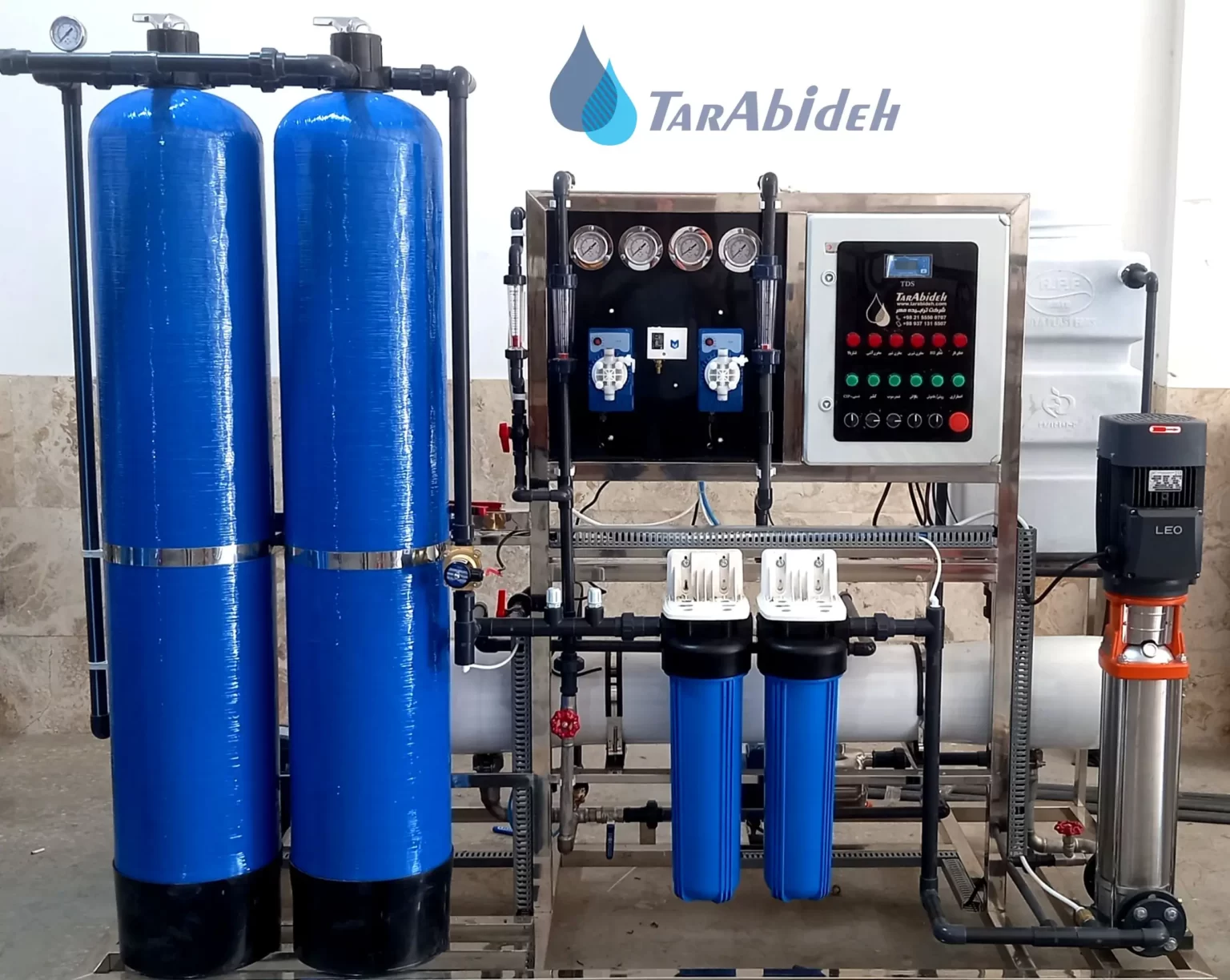
An RO system, whether residential or industrial, consists of several components that are critical to water quality and membrane lifespan. Key components include:
RO Module:
The core of the system, including pre-filters, membrane, and post-filter. Proper design of this module ensures overall system performance.
Feed Water Valve:
Connects the system to the cold water supply and provides the feed flow. Feedwater pressure and quality directly affect membrane performance and TDS removal.
Pre-Filters:
Act as the first defense against particles and contaminants, protecting the main membrane.
- Sediment Filter: Removes suspended particles like dirt, rust, and sediments down to 5 μm. Common types include Melt Blown PP, Pleated, and String-Wound filters.
- Carbon Pre-Filter: Removes chlorine, taste, odor, and chemical contaminants, preventing membrane damage. Activated Carbon Block filters also remove chloramines, reduce lead, and remove cysts like Giardia and Cryptosporidium.
Automatic Shut-Off Valve (ASO):
Stops feed flow automatically when the storage tank is about two-thirds full, saving water.
Drain Valve:
Directs wastewater (concentrate) to the sewage system. Industrial systems may recycle part of this flow to increase system recovery.
Bladder Storage Tank:
Stores purified water for on-demand use. Tank capacity and pressure depend on system application (residential or industrial).
Drinking Water Faucet:
Dedicated tap for accessing purified water.
Tubing & Quick-Connect Fittings:
Connect system components and allow easy installation and maintenance.
Optional Accessories:
- TDS meter to monitor water quality
- Filter sanitization kits
- Remineralization cartridges
- Booster pump for pressure increase
- Delivery pump, water chiller, pressure regulators
- UV sterilizer for microbial removal
Types of RO Systems and Configurations
Residential Systems:
- Under-Sink and Countertop: Common for household use.
- Tankless Systems: E.g., Waterdrop G3 (~400 gallons/day), space-saving.
Multi-Stage and Multi-Pass Systems:
- Stage: First stage concentrate is used as feed for the next stage to increase recovery.
- Double-Pass RO: Water from the first pass enters a second pass for higher purity (used for ultrapure water).
Advanced Configurations:
- Arrays: Physical arrangement of pressure modules in industrial systems.
- Concentrate Recycle: Reusing part of the reject stream to improve recovery.
- Solar-Powered RO: For areas without grid electricity.
- Military RO (ROWPU): Portable units with full pretreatment and chemical disinfection for military use.
Contaminants Removed by RO
RO systems remove 95–99% of contaminants:
- Heavy metals & inorganic compounds: Lead, arsenic, mercury, barium, cadmium, chromium, selenium, radium, fluoride, sulfates, chlorides.
- Physical & microbial contaminants: Sediment, asbestos, bacteria, viruses, colloids, Giardia, Cryptosporidium.
- Organic chemicals: VOCs, pesticides, industrial chemicals, THMs.
- Taste & odor: Removes chlorine and compounds causing unpleasant taste.
Limitation: RO is less effective at removing dissolved gases like CO₂, as they are uncharged and pass easily through the membrane.
Advantages of RO Water
- High purification: Removes >99% of contaminants, including bacteria, viruses, heavy metals, and dissolved salts.
- Improved taste: Produces fresh, palatable water by removing harmful impurities.
- Reduces waterborne diseases: Eliminates pathogens and toxic metals.
- Skin & hair friendly: Soft water reduces dryness and irritation.
- Energy-efficient: Lower energy use compared to distillation.
- Wide applicability: Treats seawater, brackish water, well water, and industrial wastewater. Suitable for SWRO and BWRO.
- Cost-effective long-term: Lower cost than bottled water, reduces annual household or industrial expenses.
- Scaling reduction: Removes Ca²⁺ and Mg²⁺, preventing deposits in pipes and equipment.
- Environmentally friendly: Physical process without chemical additives; reduces plastic bottle usage.
- Automation: Industrial RO systems can be fully automated, reducing labor costs.
Disadvantages and Challenges
- Flat taste: Complete mineral removal may result in bland taste.
- Removes beneficial minerals: Electrolytes like Na⁺, Ca²⁺, Mg²⁺, and K⁺ are also removed. WHO recommends remineralization for long-term consumption.
- High wastewater production: Household units generate 3–6 liters of concentrate per liter of purified water.
- Slow filtration: Water passes slowly through fine membrane pores.
- High initial cost: Industrial and advanced residential RO require higher upfront investment.
- Maintenance cost: Membranes replaced every 1–3 years, pre-filters every 3–6 months.
- Slightly acidic pH: Output water usually has pH 6–7, which may cause minor corrosion in piping.
RO System Performance Considerations
RO performance depends on feedwater pressure and temperature. Membranes are typically tested at 65 PSI and 25°C. Key performance indicators:
- Salt rejection: Membrane’s ability to remove contaminants.
- Recovery: Percentage of feedwater converted to purified water; higher recovery saves water but increases scaling risk.
- Flux rate: Volume of water passing through the membrane per unit time.
Pretreatment and Post-Treatment:
- Pretreatment: Prevents fouling, scaling, and chemical damage. Steps include multimedia filtration, antiscalants, softeners, chlorine removal (sodium bisulfite), and activated carbon for organics.
- Post-treatment: May include remineralization filters and UV disinfection.
Maintenance:
- Clean membranes 1–4 times per year or when efficiency drops by 15%.
- Replace sediment and carbon filters every 3–6 months, membranes every 1–3 years.
- Service pumps and motors, calibrate sensors, and inspect tubing and fittings periodically.
RO vs. Other Water Treatment Methods
- Activated carbon: Cheap, simple, but only suitable for good-quality feedwater.
- UF/NF: Lower cost for non-ultrapure applications.
- Distillation: Similar quality as RO but more energy-intensive.
- Ion exchange: Produces deionized water for specific uses.
Wide Applications of RO
- Domestic & municipal drinking water
- Seawater desalination (SWRO) & brackish water RO (BWRO)
- Industries: Power plants, food & pharma, semiconductor, hospitals, car washes
- Food & beverage: Milk concentration, juice clarification, protein powder production
- Aquariums: Removes chlorine and nitrates
- Wastewater & leachate treatment
- Special applications: Maple syrup production, brewing
Future of RO Systems
Research focuses on improving membranes using carbon nanotubes (CNTs) and graphene to enhance efficiency, selectivity, and reduce energy consumption. Hybrid RO systems combined with electrodialysis (ED) may further improve purification performance in the coming years.